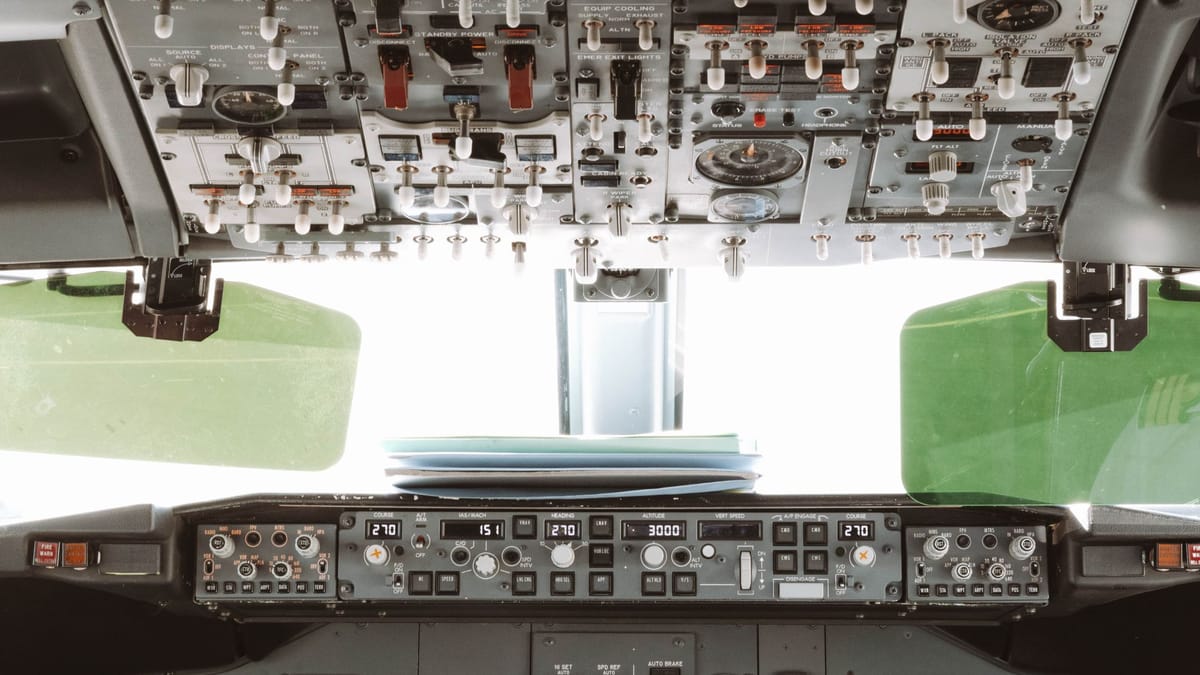
There are two main ways to become a pilot in India: as a commercial pilot, flying for airlines, or as a pilot in the armed forces. Both care about your Class 11 and 12 subjects, so the stream decision matters more here than for many careers.
Commercial pilot: the subject rule
A commercial pilot licence in India is issued by the Directorate General of Civil Aviation (DGCA). For many years DGCA has required a Class 12 pass with Physics and Mathematics. In 2025 DGCA recommended relaxing this so that students from Commerce and Humanities could train, and reports said the proposal went to the Ministry of Civil Aviation. We could not confirm that the change has been notified.
Chemistry or Biology is not the point here: the requirement has been about Physics and Maths. Most students meet it by taking PCM. How the combinations compare is explained here.
Commercial pilot: age and medical
- You can start flight training before you finish school, but you must be at least 18 to hold a commercial pilot licence.
- You need a DGCA medical from an approved examiner, with the stricter Class 1 standard for the commercial licence. Eyesight, hearing and general health are checked.
- Get the medical done before you pay for training. A condition you did not know about is far cheaper to discover first.
How commercial training works
After Class 12, students train at a DGCA-approved flying school, combining ground classes (navigation, meteorology, air regulations, technical subjects) with a set number of flying hours, and pass DGCA exams. Some also take a degree alongside, which is a sensible safety net. Training is expensive, and the cost is a family decision worth discussing early and honestly.
Air Force pilot
Flying in the Indian Air Force straight after school is through the National Defence Academy. The NDA’s Air Force wing asks for Class 12 with Physics, Chemistry and Mathematics, and the written exam includes a Maths paper. Our NDA guide covers the full route. There are also later entry routes after graduation.
Questions to ask yourself
- Am I comfortable with Physics and Maths for two more years, since they are the safe route?
- Have I had a medical check, or at least an eye test, so I know there is no obvious barrier?
- Does the family understand the cost of commercial training, and is there a plan B if training is interrupted?
- Do I want to fly for an airline, or serve in the forces? The routes split early.
Where an assessment helps
Flying leans on spatial reasoning, numerical ability and staying calm under load. An assessment cannot test your flying, but it can show how you reason with numbers and space, and whether Science with Maths suits you. Here is how we measure it, and the report ranks the streams against your results.