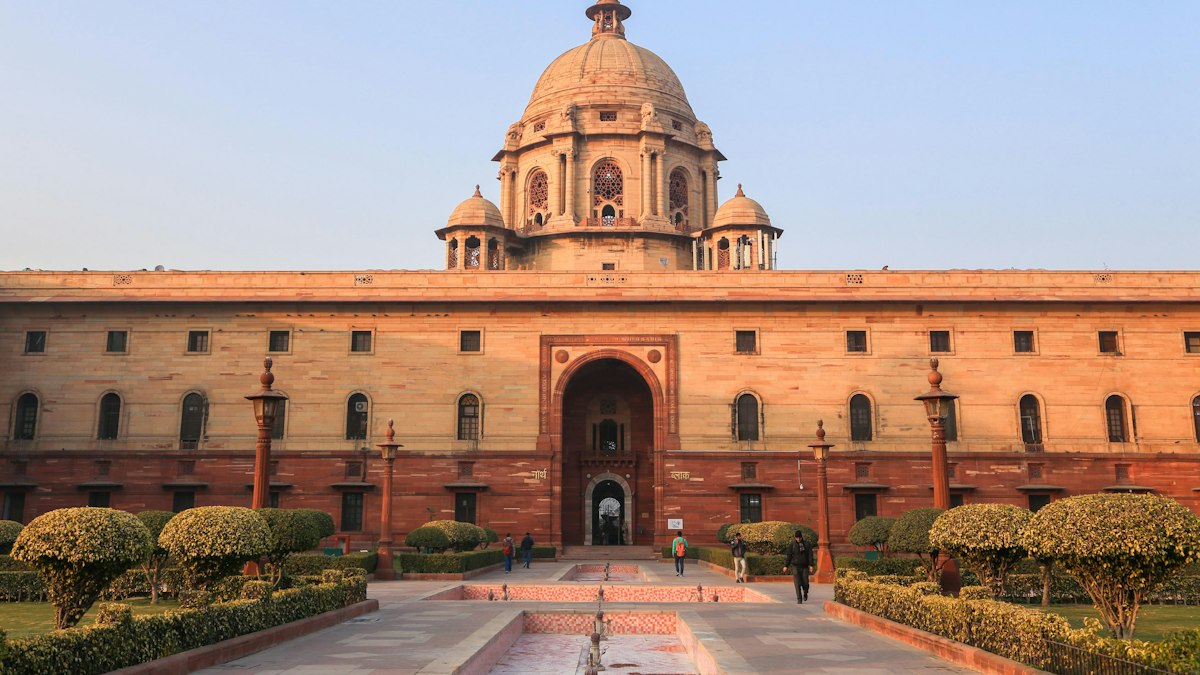
The short answer: you can become an IAS officer from any stream. The Civil Services Examination, conducted by the Union Public Service Commission, requires a bachelor's degree in any discipline and nothing about your Class 11 subjects.
That makes the stream decision less about eligibility and more about two other things: which subjects will prepare you well for the exam, and what you will do if the exam does not work out. The second question is the one families most often skip.
The eligibility answer
To sit the Civil Services Examination you need a graduate degree from a recognised university, in any subject. For the general category the age range is 21 to 32, counted on 1 August of the exam year, with a limited number of attempts; both the age limit and the number of attempts are relaxed for reserved categories. The same exam recruits for the IAS, IPS, Indian Foreign Service, Indian Revenue Service and several other services.
UPSC publishes a notification every year, and the details can change. Read the current one on upsc.gov.in rather than relying on second-hand summaries, including this one.
How the exam works
- Preliminary exam: two objective papers. General Studies decides who moves on; the second paper, CSAT, tests comprehension, reasoning and basic numeracy and only has to be passed.
- Main exam: written papers — an essay, four General Studies papers covering history, geography, polity, governance, economy, ethics and more, and two papers in an optional subject you choose — plus two language papers that only have to be passed.
- Personality test: an interview with a board.
Your optional subject is chosen from UPSC's list and does not have to match your degree. An engineer can take Sociology or Public Administration; a History graduate can take Geography.
Does Humanities give an advantage?
Partly. History, Political Science, Geography, Economics and Sociology overlap heavily with the General Studies syllabus, and Humanities students spend two years practising exactly the kind of long written answer the Main exam demands. That is a real head start.
But it is a head start measured in months of preparation, not a requirement, and candidates from engineering, medicine and commerce backgrounds are selected every year. Their degrees give them other strengths: comfort with data for CSAT, analytical habits, and a subject they can use as an optional.
| Stream | Helps with | Your fallback if UPSC does not work out |
|---|---|---|
| Humanities | General Studies overlap, essay and answer writing, many popular optional subjects | Law, policy, journalism, teaching, research, state civil services |
| Commerce | Economy papers, data questions in CSAT | Finance, CA and related careers, banking, management |
| Science | Science and technology topics, CSAT numeracy, science optionals | Engineering, medicine, research, technology careers |
The question most families skip
Far more people sit the Civil Services Examination each year than there are posts, and most serious candidates are not selected. Many who are selected succeed only after several attempts, which can mean years of preparation after graduation.
That makes the "Plan B" question central, not pessimistic. Choose a stream you will do well in and a degree that leads somewhere you would be glad to be. A student who takes Science only because it "keeps options open", while their real interest is in society and government, pays for that choice twice — we explain why in the five myths guide.
What to do in Class 11 and 12
- Read a newspaper properly — the editorial and national pages, not just headlines. It is the single most transferable habit.
- Take your NCERT books seriously in whichever stream you choose; they are the base material many candidates return to later.
- Practise writing: short, structured answers to questions you care about.
- Do not start coaching for UPSC at 15. Do well in the stream you chose; that is preparation too.
Where an assessment helps
No test can tell you whether you will clear UPSC. What an assessment can show is whether your profile fits what the exam and the job lean on: verbal ability, data interpretation and logical reasoning for CSAT, stress resilience and effort and persistence for a long preparation, and how settled your decision really is. Here is how each is measured.
If your aptitude points to one stream and your interest in public life to another, read how to weigh the two. The detailed report turns your results into a Class 11–12 subject plan.